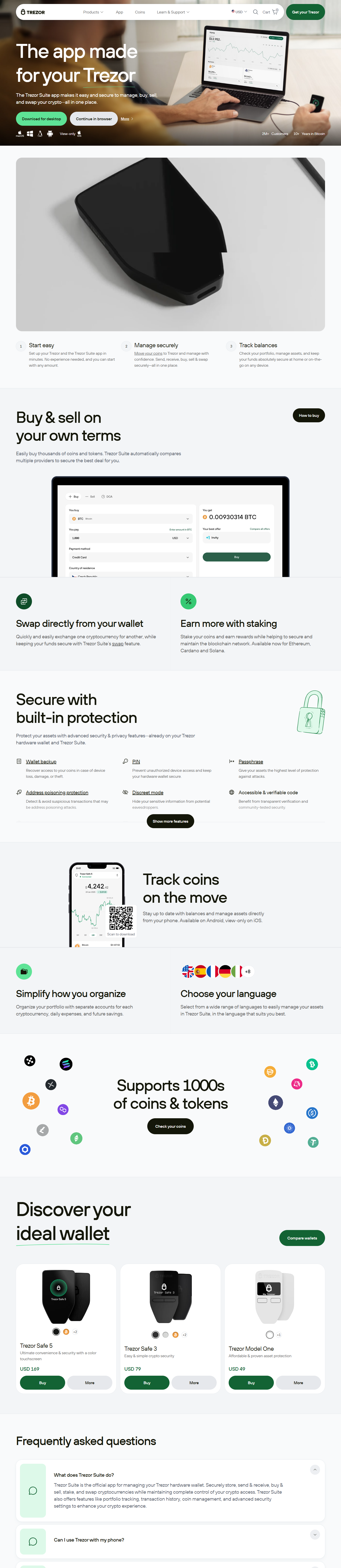
Trézor Suite | Getting Started | Official Guide for Trezor® Users
Introduction
Trézor Suite is the official application designed to work with Trezor® hardware wallets, offering users a secure and user-friendly way to manage digital assets. This getting started guide is created to help new users understand how Trézor Suite works, how to set it up correctly, and how to use it safely from the beginning.
Unlike online wallets or exchange-based accounts, Trézor Suite follows a self-custody approach. This means users remain in full control of their cryptocurrencies, while private keys are kept safely on the hardware device at all times.
What Is Trézor Suite?
Trézor Suite is a desktop and web-based interface that allows users to interact with blockchain networks using a Trezor® hardware wallet. It does not store private keys on the computer or browser. Instead, it acts as a secure control panel that communicates with the hardware device.
Through Trézor Suite, users can view balances, send and receive cryptocurrencies, manage multiple accounts, and track transaction history, all while maintaining high security standards.
System Requirements
Before getting started, users should ensure they have the necessary setup:
A supported Trezor® hardware wallet
A computer with Windows, macOS, or Linux (for desktop version)
A modern web browser (for web version)
A stable internet connection
No personal information or account registration is required to use Trézor Suite.
Desktop vs Web Version
Trézor Suite is available in two formats: desktop application and web interface.
The desktop version is recommended for users who want maximum protection and performance. It runs locally on the computer and reduces exposure to browser-based risks.
The web version is suitable for users who prefer quick access without installation. Even in the browser, all sensitive actions require confirmation on the hardware wallet, keeping assets secure.
Connecting Your Trezor® Device
To get started, users connect their Trezor® hardware wallet to the computer using a USB cable. Once connected, Trézor Suite detects the device automatically and guides the user through the setup process.
If the device is new, users are prompted to initialize it and create a recovery seed. This seed phrase is critical and should be written down and stored offline in a safe location.
Creating and Managing Accounts
After setup, users can create cryptocurrency accounts within Trézor Suite. Each account represents a separate address on the blockchain, allowing users to organize funds efficiently.
Users can create multiple accounts for the same asset, which is useful for separating personal funds, savings, or business-related holdings.
Sending and Receiving Cryptocurrency
Receiving funds is straightforward. Trézor Suite displays a verified wallet address on both the screen and the hardware device. Users should always confirm that the address matches on the device before sharing it.
When sending funds, the transaction details appear in the application and must be approved on the hardware wallet. This extra step ensures protection against unauthorized or altered transactions.
Security Best Practices
Security is a core principle of Trézor Suite. To maintain safety, users should follow these best practices:
Never share the recovery seed with anyone
Always verify addresses on the hardware device
Keep device firmware up to date
Avoid using unknown or untrusted computers
Store the recovery phrase offline
Following these steps helps protect assets even in the event of computer compromise.
Privacy Features
Trézor Suite includes features designed to enhance user privacy. Users can hide balances, manage transaction fees manually, and use advanced coin selection tools.
These options allow users to reduce unnecessary data exposure and maintain greater control over how transactions are processed on the blockchain.
Supported Cryptocurrencies
Trézor Suite supports a wide range of popular cryptocurrencies and token standards. This allows users to manage diversified portfolios within a single interface.
Support is continuously expanded through updates, ensuring compatibility with evolving blockchain networks and technologies.
Built-In Exchange and Buy Options
Trézor Suite may include optional third-party services that allow users to buy, sell, or exchange cryptocurrencies directly within the app. These services are integrated in a way that preserves self-custody.
All transactions still require confirmation on the hardware wallet, ensuring that users remain in control of their assets at all times.
Open-Source Transparency
Trézor Suite follows an open-source development model. This allows developers and security researchers to inspect the software, identify vulnerabilities, and contribute improvements.
Open-source transparency increases trust and ensures that the software remains reliable, auditable, and aligned with community standards.
Troubleshooting and Updates
Regular updates help improve performance, add new features, and enhance security. Users are encouraged to keep both the application and device firmware up to date.
If issues arise, Trézor Suite provides clear messages and guidance to help users resolve common problems without risking funds.
Who Should Use Trézor Suite?
Trézor Suite is suitable for beginners learning how to manage cryptocurrency securely as well as experienced users who require advanced control. It is especially useful for those moving away from exchange wallets and seeking full ownership of their digital assets.
Long-term holders, privacy-focused users, and professionals managing multiple accounts all benefit from its design.
Conclusion
Trézor Suite is a powerful and secure application that simplifies cryptocurrency management while maintaining strict self-custody principles. By combining hardware-based protection with a clean and accessible interface, it offers a trusted environment for managing digital assets.